
Updated July, 2026
About ten minutes before a ceremony I officiated a while back, I asked the bride a question I probably should have left alone.
She and her partner had come to me months earlier wrestling with the child-free wedding decision. We had talked through both sides honestly. I had told them what I tell every couple who asks: the decision itself is completely valid, but the family dynamics it can unleash are real and sometimes underestimated. I encouraged them to think carefully about whether the tradeoff was worth it for their specific family situation.
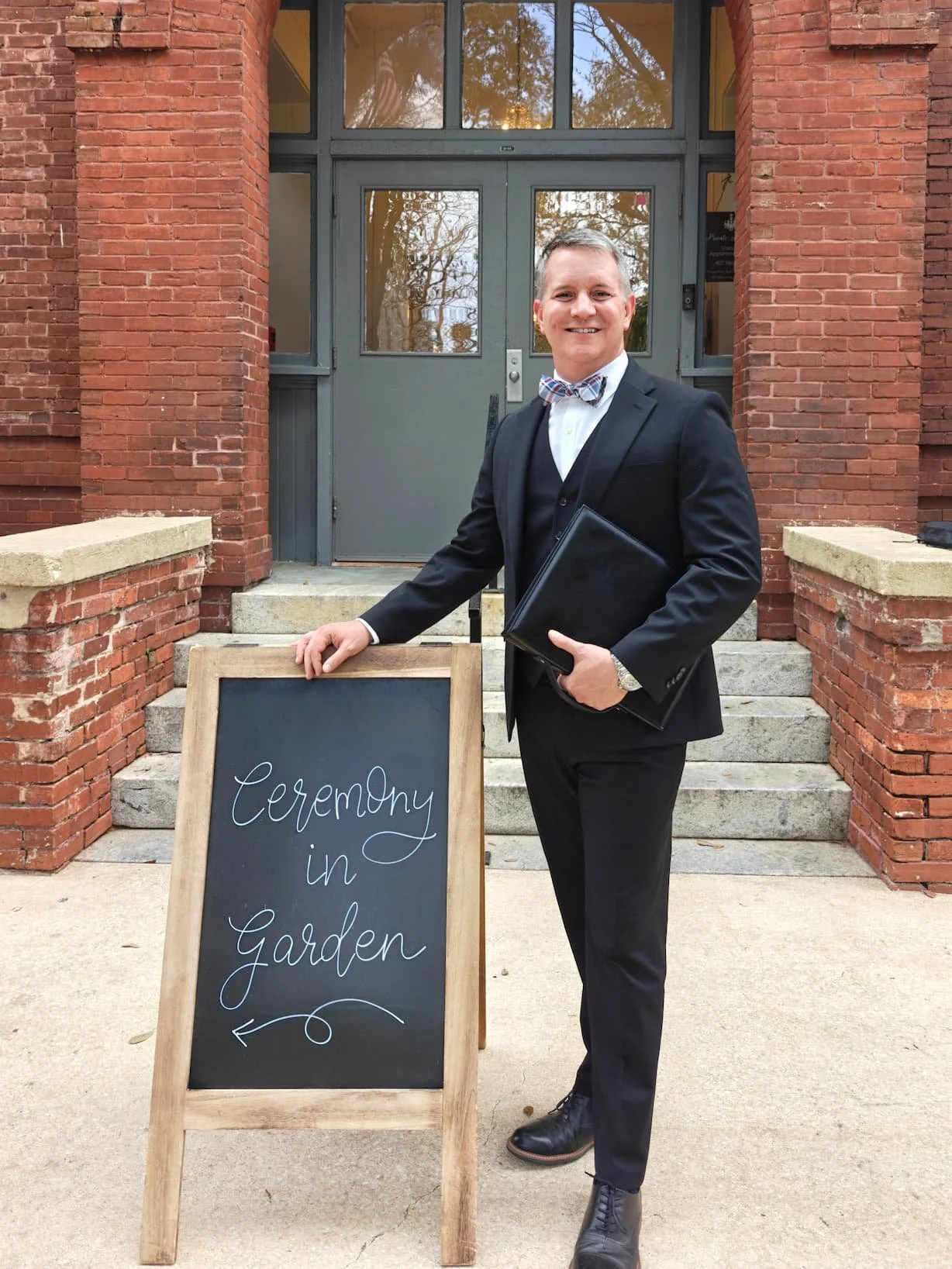
Fast forward to the wedding day. I looked out at the room and noticed children in the seats.
I probably should have just let it go. Ten minutes before a ceremony is not the time to revisit anything sensitive. And yet there I was, asking the bride what happened.
She said there had been family drama. Significant family drama. And she wished she had listened to me to begin with. I could see it on her face. She was carrying battle scars into one of the most important moments of her life, and those scars were entirely avoidable.
That conversation is why this post exists. Not to talk you out of a child-free wedding. If that is what you want, I am genuinely in your corner. But I want you to walk into that decision with your eyes wide open, because the couples who do it well are the ones who thought it all the way through before they sent a single invitation.
Why Couples Want Child-Free Weddings
The reasons are usually practical and completely understandable.
Children change the atmosphere of a ceremony and a reception in ways that are hard to predict and impossible to control. A toddler who decides the processional is the perfect moment for a meltdown. A four-year-old who discovers the dance floor an hour before you planned to clear it. A nursing mother who needs to step out during the vows. None of these things are anyone's fault. They are just children being children at an event that was not designed for children.
There is also a headcount reality that matters more than most couples acknowledge before they start planning. We covered this in the guest list series, but children attached to invited families can add thirty or forty people to a headcount without anyone consciously deciding to invite them. A child-free wedding is sometimes less about the atmosphere and more about the math.
Both reasons are legitimate. Neither one requires an apology.
What the Pushback Actually Looks Like
Here is what I want you to understand before you make this decision: the people who push back hardest are almost never pushing back about your wedding. They are pushing back about their own logistical stress.
Finding childcare for a wedding is genuinely difficult. It is expensive. It requires planning. For parents of young children, a Saturday evening event without their kids means arranging care, paying for it, worrying about it, and then trying to be present and joyful at your wedding while that background noise runs in their heads. Most parents manage this gracefully. Some do not.
When someone says I guess we just will not come then, what they usually mean is this is really hard for us and we are overwhelmed. When someone says but they are family, what they usually mean is I did not expect to feel excluded by people I love. Those are real feelings even if they are expressed badly.
That does not mean you owe them an exception. It means you should expect the conversation to be emotional rather than rational, and plan accordingly.
The One Rule That Makes It Work
If you decide to have a child-free wedding the single most important thing you can do is be completely consistent.
The moment you make one exception, the entire decision unravels. Word travels faster than your invitations. If your partner's nephew is allowed to come and your cousin's daughter is not, you have not avoided family drama. You have created a more specific and more painful version of it.
Consistent means no exceptions. It means the flower girl and the ring bearer follow the same rule as everyone else unless you have explicitly carved out a space for children in the ceremony only. It means you have a clear answer ready when someone asks and that answer does not change based on how hard they push.
Consistent also means communicating it clearly before anyone has to ask. Put it on your wedding website. Address invitations specifically to the adults. Do not make people discover the policy by reading between the lines.
The Wedding Sitter Option
If the thought of cousins or close friends missing the day because of childcare is genuinely distressing, there is a middle ground worth knowing about.
Some couples hire a professional wedding childcare service to host the children in a separate suite or room at the venue during the ceremony and reception. The children have pizza, movies, and activities. The parents are fifty feet away and can check in whenever they want. The ceremony stays focused and the reception stays adult without anyone missing it entirely.
I have seen this work beautifully. The children are usually happier than they would have been sitting through a ceremony. The parents relax more than they expected. And the couple gets the atmosphere they wanted without the guilt of parents who could not find childcare.
It is not the right solution for every wedding or every venue. But if the headcount math allows for it and your venue has the space, it is worth a conversation with your coordinator.
The Question Worth Asking Before You Decide
Before you commit to a child-free wedding, sit with this question honestly.
Is the atmosphere you are trying to create worth the specific family dynamics it will create in your specific family?
Not families in general. Your family. The one with the aunt who will take it personally and say so at Thanksgiving. The one with the cousin whose kids are the reason she does not travel without them. The one with whoever it is in your particular situation who will make this harder than it needs to be.
Some couples answer that question and say yes, absolutely, the atmosphere matters more and we can handle the dynamics. That is a completely valid answer and I will support you fully.
Some couples answer it and decide the drama is not worth it for their particular family situation. That is also a completely valid answer.
The bride I mentioned at the beginning of this post answered it too quickly and changed her mind under pressure. She got the children at her wedding and the drama anyway. That is the outcome I most want to help you avoid.
Decide deliberately. Communicate clearly. Hold the line or do not have one. Just do not end up standing at the altar carrying battle scars that did not have to be there.