I want to tell you about a ceremony I did not officiate.
A couple I know asked a family friend to do the honors. He was funny, he was well-liked, and he agreed to do it as a gift. He got ordained online the week before the wedding, wrote a short script he thought was sweet, and showed up on the day ready to help.
What actually happened: he spoke too quietly for anyone past the third row to hear. He lost his place in the script twice. He forgot to tell the couple when to exchange rings, so they stood there looking at each other waiting for a cue that never came. He signed the marriage license with the wrong pen and the ink would not scan at the clerk's office, which meant the couple had to make a separate trip to sort it out after the honeymoon.
None of that was his fault. He was not a professional. He had never done this before. He did his best and his best was not enough for the most important fifteen minutes of his friends' wedding day.
I tell you this not to be harsh about a well-meaning person but because this is the conversation couples rarely have before they make the decision. The question is usually framed as whether a professional officiant is worth the extra cost. I would ask you to frame it differently. The question is what you are actually paying for, and whether the alternative genuinely gives you the same thing.
It does not. Here is what a professional actually brings.
A Ceremony That Sounds Like You
The most common thing I hear after a ceremony is some version of: that felt exactly like them. Guests say it. The couple says it. Vendors who have seen hundreds of ceremonies say it.
That does not happen by accident. It happens because a professional officiant spends significant time before the wedding getting to know the couple, not just their names and the order of events but their story, their personalities, the specific texture of their relationship. How they met. What they are like together. What makes them laugh. What they value. The inside references that will make the couple's closest people feel seen and the rest of the guests feel warmly included.
That research turns into a script, and that script turns into a ceremony that could not have been written for anyone else. It is the difference between a ceremony that sounds like a ceremony and one that sounds like a story your guests will talk about at dinner afterward.
A friend who agrees to do it as a favor is working from what they know about you, which may be quite a lot. But they are not trained in how to translate that knowledge into something that lands for 150 people at the same time, with the right pacing, the right tone, the right moments of levity and weight. That is a specific skill and it takes time to develop.
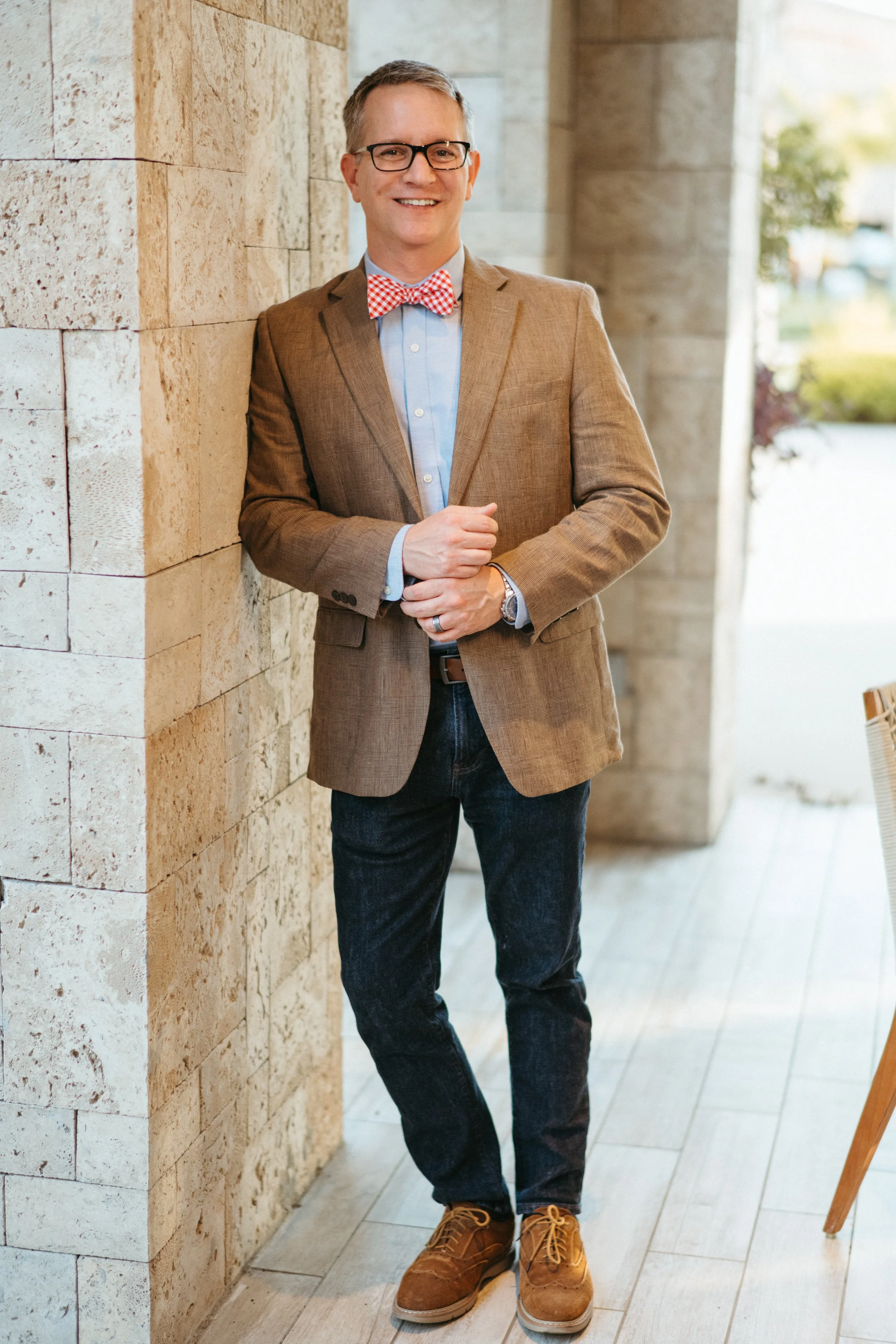
Guy at Mission Resort + Club
Knowing Florida Marriage Law Inside Out
Florida has specific legal requirements for a wedding ceremony to produce a valid marriage. There is a three-day waiting period after the license is issued before the ceremony can take place, with a limited exception for Florida residents who complete a premarital course. The license must be signed by the officiant and both parties at the ceremony. It must be returned to the clerk of courts within ten days. The information on the license must match exactly what appears on the legal document.
A professional officiant knows all of this. More importantly, a professional knows the details that trip people up. The specific language required in the ceremony. The way the license needs to be handled at the signing. The common errors that cause licenses to be rejected at the clerk's office and what to do if something looks wrong.
The couple I mentioned earlier had to make an extra trip to fix a license issue on their honeymoon. That is an entirely preventable problem when the person holding the pen has filed licenses correctly dozens of times before.
The legal piece is not the romantic piece of hiring an officiant but it is the piece that determines whether you are actually married at the end of the day. It deserves someone who gets it right every time.
Composure When Things Go Sideways
Here is something every experienced officiant knows: something will go sideways. Not might. Will.
It might be a microphone that cuts out halfway through the opening. It might be a late start because the photographer needed more time getting ready photos. It might be a sudden Florida afternoon storm that moves the ceremony indoors ten minutes before it was supposed to begin. It might be a flower girl who decides the aisle is a better place for a nap than for walking. It might be a guest who arrives after the processional and needs to be seated without stopping everything.
A professional officiant has seen all of these things and more. The composure that comes from experience is not something you can manufacture on the day. It is built over dozens and dozens of ceremonies where unexpected things happened and the person at the front of the room had to make a quick decision without letting the couple or the guests feel the disruption.
That calm is contagious. When the officiant is steady, the couple feels steady. When the couple feels steady, the guests feel steady. The whole ceremony holds its shape even when something underneath it shifted.
Your friend who agreed to do it as a favor has never experienced this. There is no way to know in advance how they will handle it. That uncertainty is part of what you are paying to remove.
Working With the Rest of Your Team
A wedding ceremony is a production with multiple professionals working in coordination, and the officiant is at the center of it.
The photographer needs to know where to position themselves to capture the first kiss without an officiant's arm in the frame. The videographer needs the officiant to know not to step to the side at the wrong moment. The DJ or live musician needs to know exactly when the recessional music should start and what the cue is. The coordinator needs to know the officiant's timing so the entire day schedule holds.
A professional officiant knows all of this from experience and handles it without being managed. I know where to stand so the first kiss is unobstructed. I know to give the DJ a clear visual cue before the recessional. I know how to pace a ceremony so it lands at the right length without feeling rushed or padded. I know how to communicate with a coordinator in the days before the wedding so there are no surprises on the day itself.
A first-time officiant, no matter how well-intentioned, is learning all of this in real time at your wedding. The professionals around them are making adjustments to compensate, which means your photographer is spending mental energy on a problem that should not exist.
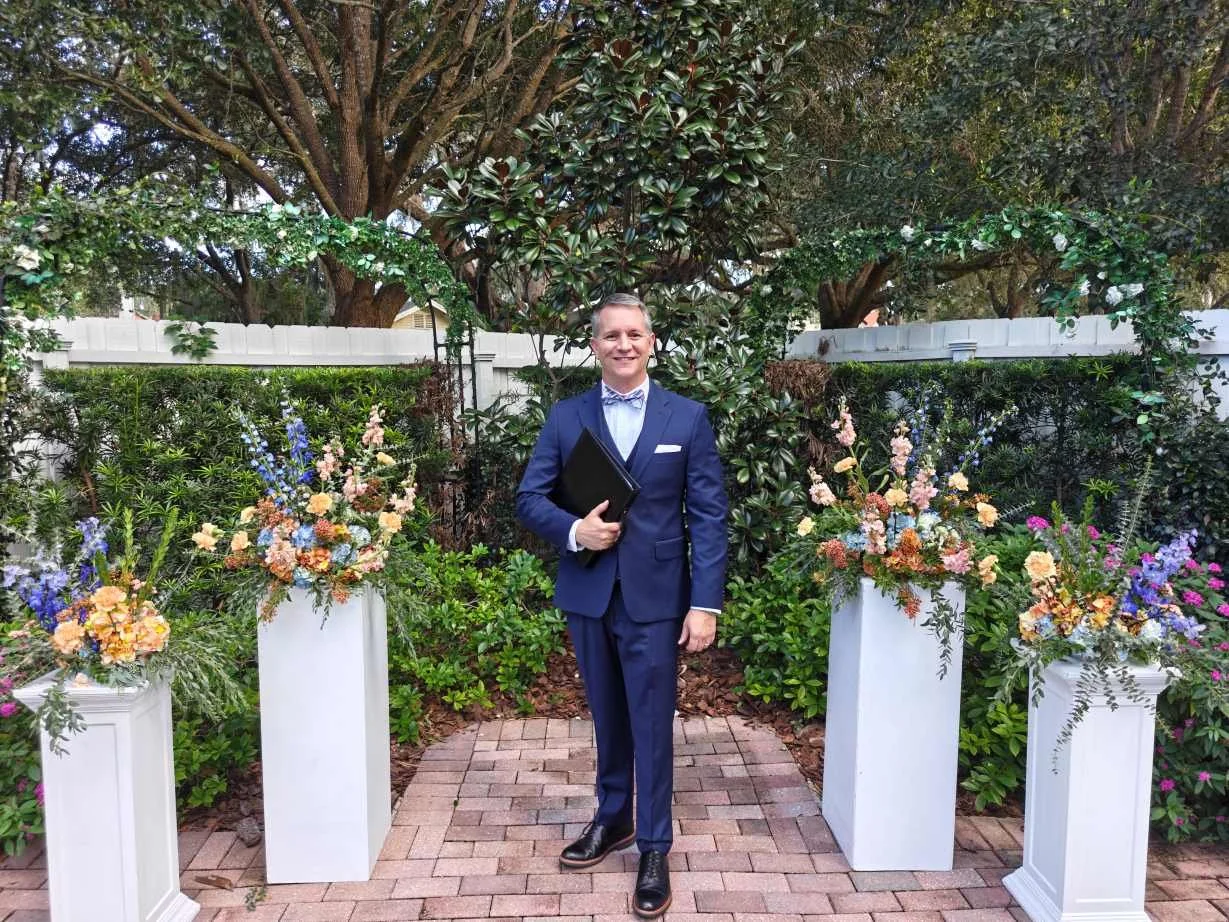
Guy is waiting for the ceremony to begin at Historic Venue 1902
Reliability That Is Built Into the Contract
When you hire a professional, you are entering a legal agreement with a business. There is a contract that specifies exactly what will happen, when it will happen, and what recourse exists if something does not go as planned. There is a professional reputation at stake. There is liability insurance in most cases. There is a process for the ceremony workshop, the script review, the day-of timeline, and the license filing.
When you ask a friend or family member, you are entering into a social agreement built on trust and goodwill. Those are genuinely valuable things. They are not, however, a contract. If something comes up and your friend cannot make it three weeks before your wedding, you are starting the search for an officiant at one of the hardest moments in the planning process.
That does not mean friends and family members always let couples down. Many of them show up and do a beautiful job. But the reliability of a professional is structural rather than personal. It does not depend on anyone's life staying uncomplicated between the booking and the wedding day.
The Ceremony Is Not the Preamble to the Party
I want to close with the thing I feel most strongly about, which is how couples sometimes think about the ceremony relative to everything else.
The reception is longer. It costs more. It involves more vendors and more moving parts and more of the budget. It is easy to treat it as the main event and to think of the ceremony as the necessary prelude that gets everyone to the party.
But here is what I know from standing at the front of more ceremonies than I can count: the ceremony is the only part of the day that is purely about you and your person. The reception is a party you are throwing for other people. The ceremony is the moment you actually get married.
The vows you exchange in those fifteen minutes will be the thing you remember most clearly when you are 70 years old and someone asks you about your wedding day. Not the centerpieces. Not the cocktail hour. Not the first dance song. The moment you looked at each other and said the things you said in front of everyone you love.
That moment deserves the most capable person you can find to hold it.
That is what you are paying for.
Planning your Orlando wedding ceremony? I would love to be part of your day. Learn more about working with Guy Thee Wed.