
I usually arrive about 45 minutes before a ceremony. When the sky looks questionable, I expect to walk into a space that has already been flipped. Chairs moved inside, the arch rebuilt, the aisle set, everything ready. Ideally, no guest ever knows the original plan was outdoors. That is what a well-executed rain plan looks like, and most of the venues and planners I work with pull it off without breaking a sweat.
This fall, a few didn't. Two weddings in particular have stuck with me, and if you are planning an outdoor ceremony in Central Florida, I want you to hear about both of them.
The wedding that waited too long
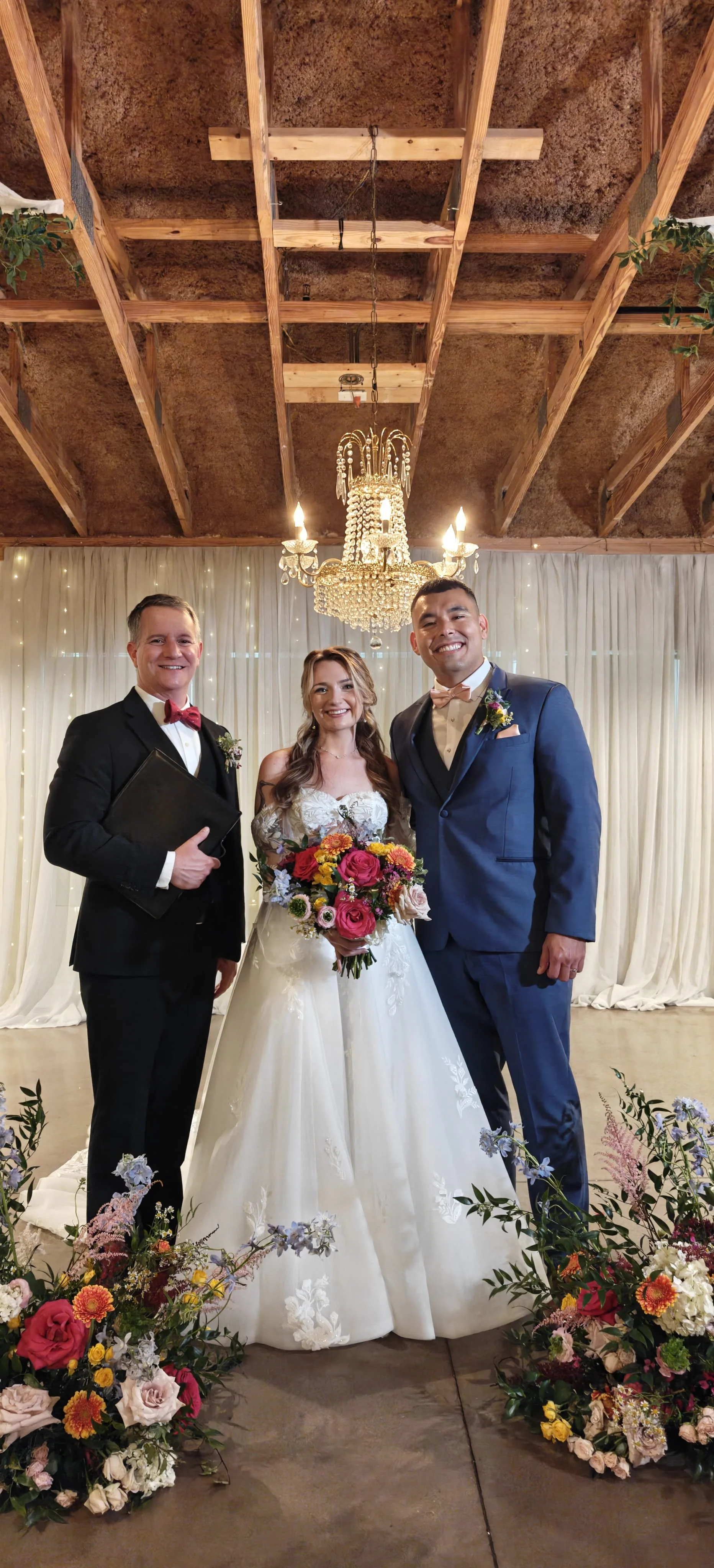
A lovely wedding moved indoors on a rainy day.
At the first one, there was lightning in the area. Not on the horizon. Close enough that we could hear it. I assumed the rain plan had already been called. Instead, the coordinator was handing out umbrellas and sending guests out to the outdoor ceremony space.
She finally called it about five minutes before the ceremony was supposed to start. So every guest stood around in the reception space, dressed up and waiting, while everyone available pitched in to flip the room around them. The ceremony happened, but the first thing those guests experienced was confusion, with the couple's reception space being rearranged in front of them.
Lightning is not a judgment call. If you can hear thunder, it is close enough to be dangerous, and nobody should be walking guests toward an open lawn.
The wedding that didn't call it at all
The second one is the one I keep thinking about.
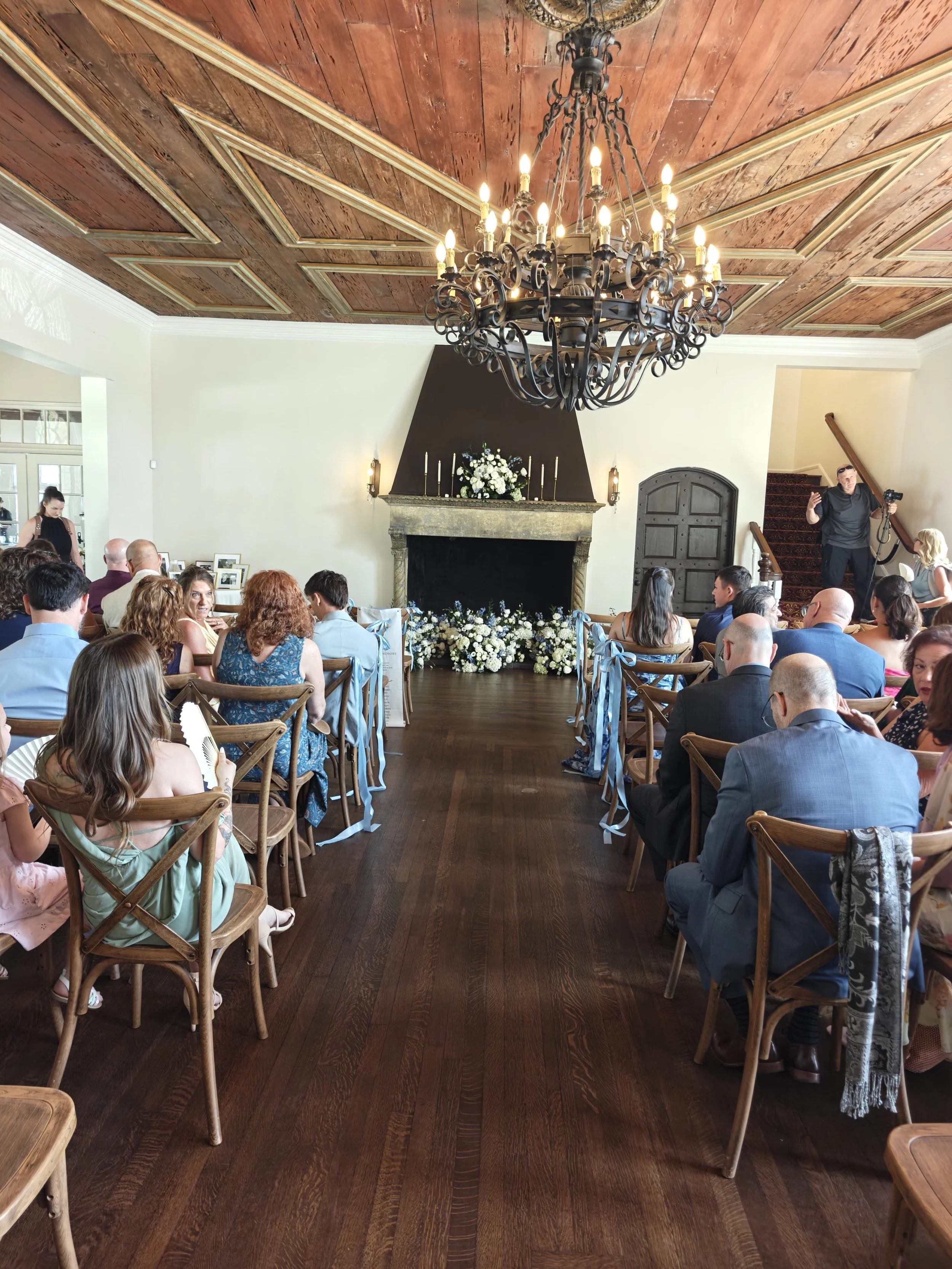
No one had any idea that this ceremony location was Plan B.
Before the ceremony, I checked the radar. Rain was going to hit about halfway through. I found the coordinator, and she told me they were going ahead outdoors because the bride insisted. I asked who would call it if it started raining. She said the bride should.
I regret not challenging that.
About ten minutes in, it started to drizzle. Then it started to rain. I looked out at the guests, and they were miserable. Women who had spent the morning on their hair and makeup, in their nicest clothes, were hiding under their partners' jackets. Several guests got up and left. They left the ceremony.
And the bride and groom had no idea. That is not a criticism of them. During a ceremony, the couple is facing each other, completely locked in, which is exactly where they should be. I am the one facing the guests. I am the one who can see everything happening in those chairs.
So I finally leaned in and said to them, off the mic, "I think we need to call it. The guests are miserable." They agreed. We moved everyone into the reception space and finished the ceremony there.
It worked out. They are married. But it didn't have to go that way.
To the bride who really wants the outdoor ceremony
I get it. You have pictured it for a long time. The trees, the light, the view behind you in every photo. The indoor space feels like settling.
But here is what I want you to hear: no outdoor ceremony is worth it if your guests are miserable. The people in those chairs drove in, dressed up, maybe flew in, to watch you get married. If they are soaked, worried about lightning, or quietly slipping out, they are not watching you. They are just getting through it.
The ceremony is the one part of the day that is purely about the two of you. It deserves guests who can actually pay attention to it.
Who calls it, and when
Central Florida rain is unpredictable during both the spring and fall wedding seasons. A clear morning tells you very little about the afternoon. That is exactly why the decision needs to be planned before the day, not made in the moment.
The best venues and planners I work with have the rain call in writing. The bigger hotels usually make the decision a few hours before the ceremony, and once it is made, it cannot be reversed. That is because they have specific staff assigned to the flip, and those people need notice.
Venues where your planner and their team handle the flip tend to wait closer to the ceremony. That is fine, within limits. In my experience, the latest the call should be made is one hour before the ceremony. That gives the team time to flip the space and be completely finished no later than 30 minutes before, so arriving guests walk into a room that looks like it was always the plan.
Before your wedding, ask your venue and your planner three things: when the rain call gets made, who makes it, and whether that is in writing. If the answer is "we'll see how it looks," push for something more specific. And if the answer to who makes it is "the bride, if it starts raining," that is not a plan.
What I do now
Those two weddings changed how I handle weather. I used to defer completely to the coordinator. Now that I have seen what happens when nobody makes the call, I take a more proactive stance. When the radar looks bad, I ask the question earlier, and I push back if the plan is to wait and see.
The coordinator still runs the day. But I am the one standing up front facing your guests, and I would rather speak up before anyone has to hide under a jacket.
Call it early. Your guests will never know, and that is the whole point.